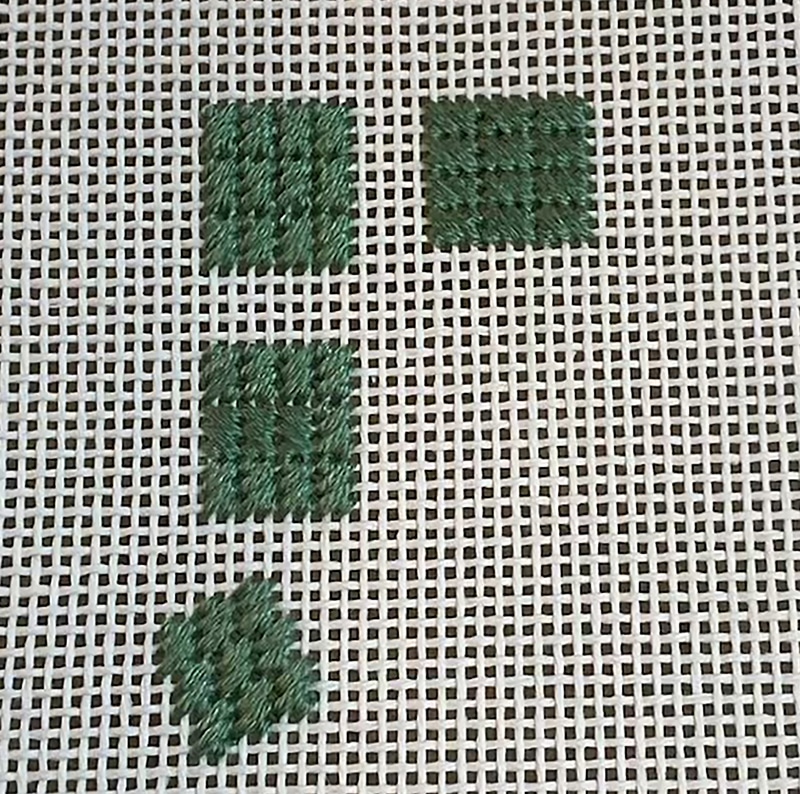
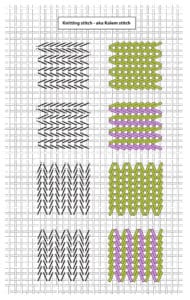
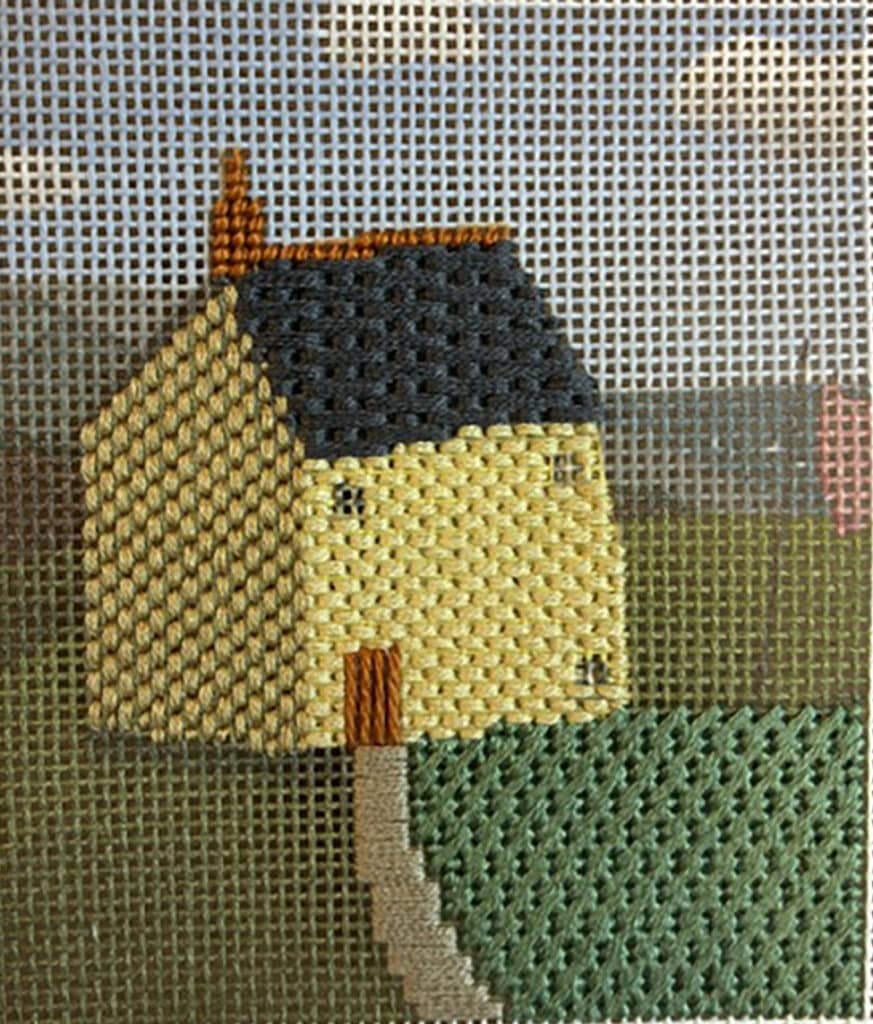
Stitch Course Lesson 6 STITCH COURSE DIVE IN TO LESSON VI What happens when you use some of the stitches we have reviewed so farThis is the house that Holly built Each of the elements above are stitched with stitches from previous lessons. Highlighted today to give you a visual of how these stitches look near one another – step one of showcasing who plays nice with whom. Stitches:Grass – nobukoSidewalk – horizontal satinDoor – vertical satinHouse front – horizontal brickHouse side – vertical brickRoof – horizontal long and shortRoofline & chimney – basketweave The goal of this course is to journey through the execution of a variety of stitchesso that when you get a new canvas (hopefully one from Art Needlepoint),you can study the details and see what stitch might work well in certain sections of the canvas. A journey of experienceso you can build your own stitch guides with one or more selected stitches.By the end of the course, you will learn that you can changethe direction of some stitches to see the pattern each one creates.Make solid judgements about whether to use a certain stitch. Let’s look at a few others today that you can put on any one of the canvasesyou have already been sent with any of the threads you have received. Cashmere from Lesson One was a traditional Cashmere.This lovely stitch has a variety of looks. Here’s a few : staggered – top right diagonal – top left traditional – in Lesson Ialternating – middle of first columncondensed – bottom of first column Go to Lesson One canvas and fill in above with the silk thread you have left over. NEXT UP IS THE KALEMKalem is one of the best background stitches there is. It does well for details in all areas, you can also outline in the stitch. It can be worked so that the texture runs vertically, horizontally or if you choose, diagonally.Work a half cross stitch at the beginning and end of each row slanting in the OPPOSITE direction that the row is to go. This will give a clean line to the edge of the stitch. This stitch takes little less thread . It should be stroked in and out with one thrust on the surface of the canvas. Stitch as you would a continental turning the canvas.